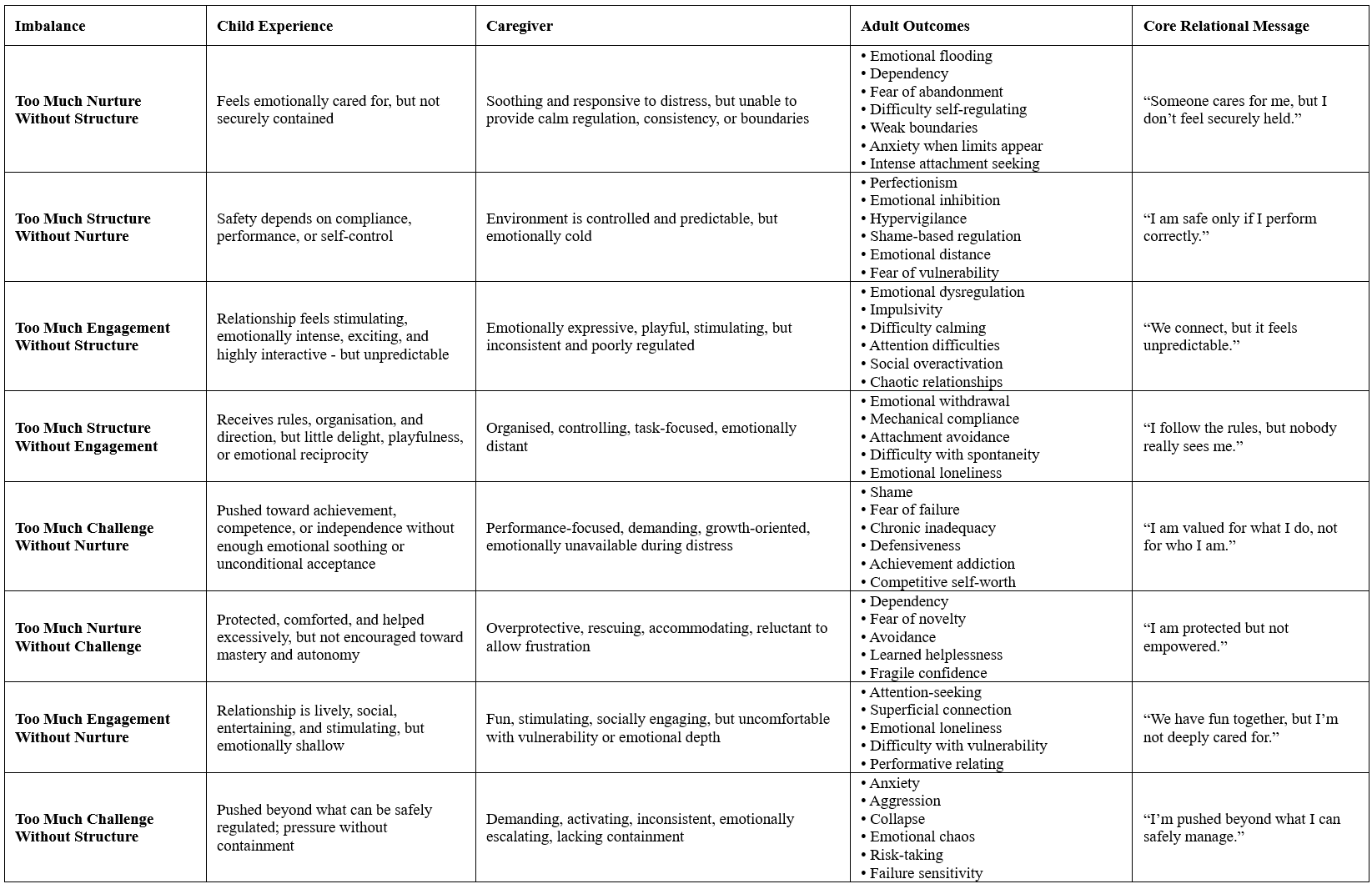
To help consolidate this information, lets look at an example:
Emma is a 22-year-old woman who comes to therapy because relationships become emotionally intense very quickly. She reports fears of abandonment, feeling “too much” to others, panics when her partners need space, struggles with boundaries, alternates between dependency and anger and minor perceived rejections feel catastrophic. She says “I know people care about me, but I never feel secure”.
Emma reports a mother who was highly affectionate and present, however, became overwhelmed easily, struggled with regulating herself, and often rescued Emma from her anger. She reports her father was emotionally inconsistent and unpredictable.
Emma learned as a child that her emotions mattered (Nurture), but what was missing was calm co-regulation, predictable boundaries and frustration tolerance support (Structure). When emotions got big in the family, everyone became overwhelmed and limits disappeared. She learned that “strong feelings take over everything”.
Emma’s nervous system as an adult developed towards chronic attachment seeking and hypervigilance toward rejection, but she struggled to fully develop internal containment, emotional self-regulation and confidence that relationships can remain stable during distress.
As an adult - Be present, stay mindful and remain curious about yourself, others and the world around you.
Regards, Brittany x